Telling them apart
Mediterranean cypress vs Oriental arborvitae
Mediterranean cypress (Cupressus sempervirens) and Oriental arborvitae (Platycladus orientalis) look similar enough to be confused. Both belong to the same family, Cupressaceae (cypress family).
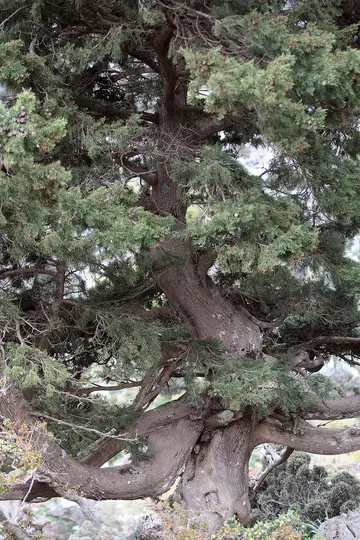
Image wanted. A licensed image will be added when found.
How to tell them apart
- Mediterranean cypress: Same family with scale leaves too, but its shoots do not form flat, upright sprays and its cones are round, woody and 2–4 cm across.
Side by side
| Mediterranean cypress | Oriental arborvitae | |
|---|---|---|
| Scientific name | Cupressus sempervirens | Platycladus orientalis |
| Family | Cupressaceae (cypress family) | Cupressaceae (cypress family) |
| Form | tree, perennial, evergreen | tree, perennial, evergreen |
| Height | 20–35 m | 15–20 m |
| Flower colour | — | — |
| Origin | Eastern Mediterranean | Northeast Asia |
| Toxicity | — | — |
| Flowering | — | — |
| Leaves | Tiny, scale-like, dark green leaves pressed tightly against the shoots. | Scale leaves 2–4 mm long in four rows pressed against the shoot; bright green, turning brownish, yellow-green or coppery orange in winter. The shoots are flattened and held in vertical planes. |
| Flowers | Cypresses do not flower; male cones shed plenty of pollen in late winter. | Does not flower; its seeds develop in cones. |
| Fruit and seeds | Round, woody cones 2–4 cm across with 10–14 shield-shaped scales, green at first, ripening greyish brown. | Cones 1.5–2.5 cm long, pale blue-green when young and brown about eight months after pollination, with 6–12 thick scales in opposite pairs. The seeds are wingless. |
All pairs: look-alike plants · Full pages: Mediterranean cypress, Oriental arborvitae