Telling them apart
Japanese cherry vs Sweet cherry
Japanese cherry (Prunus serrulata) and Sweet cherry (Prunus avium) look similar enough to be confused. Both belong to the same family, Rosaceae (rose family).
Image wanted. A licensed image will be added when found.
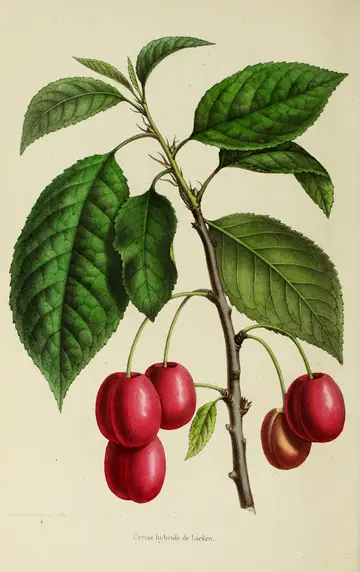
How to tell them apart
- Sweet cherry: Same genus, also with white five-petalled flowers that open with the leaves, but it is grown for its fruit: single-stoned, fleshy cherries from dark red to yellow. Its leaf stalk carries small red nectar glands.
Side by side
| Japanese cherry | Sweet cherry | |
|---|---|---|
| Scientific name | Prunus serrulata | Prunus avium |
| Family | Rosaceae (rose family) | Rosaceae (rose family) |
| Form | tree, perennial, deciduous | tree, perennial, deciduous |
| Height | 7.9–11.9 m | 5–25 m (shorter in cultivation) |
| Flower colour | White, Pink | White |
| Origin | China, Korea and Manchuria | Europe, North Africa and western Asia |
| Toxicity | Cats: toxic · Dogs: toxic | Cats: toxic · Dogs: toxic |
| Flowering | — | |
| Leaves | Alternate, simple, ovate-lanceolate leaves 5–13 cm long and 2.5–6.5 cm wide with toothed or double-toothed margins; they turn yellow, red or crimson in autumn. | Oval, pointed, toothed leaves 7–14 cm long, with two to five small red nectar glands at the top of the leaf stalk. |
| Flowers | White to pink flowers in clusters of two to five on short spurs in spring, as the new leaves appear; five petals in the wild form. | White five-petalled flowers 2.5–3.5 cm across, in clusters of two to six on long stalks, opening with the leaves; pollinated by bees. |
| Fruit and seeds | A round black drupe 8–10 mm across (sakuranbo); bitter, and rarely eaten raw. | A fleshy stone fruit with a single stone, from dark red to yellow in cultivated varieties. |
All pairs: look-alike plants · Full pages: Japanese cherry, Sweet cherry