Telling them apart
Hyacinth vs Tuberose
Hyacinth (Hyacinthus orientalis) and Tuberose (Polianthes tuberosa) look similar enough to be confused. Both belong to the same family, Asparagaceae (asparagus family).
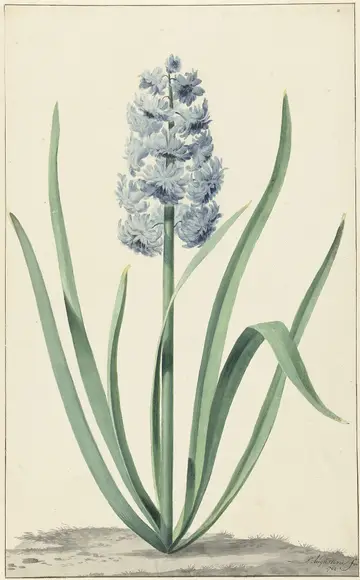
Image wanted. A licensed image will be added when found.
How to tell them apart
- Hyacinth: Similar Turkish name and the same family (asparagus family), but hyacinth grows from a bulb, has four to six strap-shaped glossy leaves, and its bell-shaped, six-parted flowers form a dense spike on a single stalk.
Side by side
| Hyacinth | Tuberose | |
|---|---|---|
| Scientific name | Hyacinthus orientalis | Polianthes tuberosa |
| Family | Asparagaceae (asparagus family) | Asparagaceae (asparagus family) |
| Form | herbaceous, perennial | herbaceous (tuberous), perennial |
| Height | 15–30 cm | Flower spike up to 1 m |
| Flower colour | Blue, Purple, Pink, White | White |
| Origin | Türkiye, Syria, Lebanon, Iraq | Mexico |
| Toxicity | People: mildly toxic / irritant · Cats: toxic · Dogs: toxic | — |
| Flowering | — | |
| Leaves | 4–6 strap-shaped, glossy green, fleshy leaves from the bulb. | Dull green leaves 30–50 cm long and up to 13 mm wide at the base. |
| Flowers | Bell-shaped, six-lobed flowers in a dense spike on a single stalk. Wild plants have sparse, pale blue flowers; garden varieties are much denser, in blue, purple, pink, white or yellow. | Pure white, waxy, tubular flowers on spikes up to 1 m tall; the tube, up to 6 cm long, opens into six flaring segments. Strongly fragrant. Double cultivars such as 'The Pearl' exist. |
| Fruit and seeds | A three-chambered capsule. | — |
All pairs: look-alike plants · Full pages: Hyacinth, Tuberose