Telling them apart
Deadly nightshade vs Holy bramble
Deadly nightshade (Atropa bella-donna) and Holy bramble (Rubus creticus) look similar enough to be confused. They belong to different families: Solanaceae (nightshade family) and Rosaceae (rose family).
CautionDeadly nightshade is poisonous to people. Never pick or eat a wild plant unless you are certain of its identity. If poisoning is suspected, call your local poison centre or emergency number.
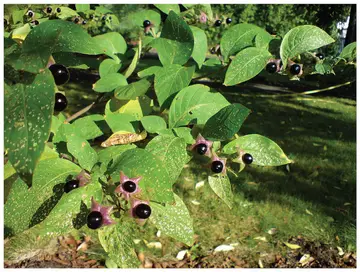
Image wanted. A licensed image will be added when found.
How to tell them apart
- Deadly nightshade: Also has glossy black berries, but each is a single round, cherry-like bead sitting on a green star-shaped calyx, and the plant has no prickles. A bramble fruit is made of many small drupelets and the plant is prickly. Deadly nightshade is highly poisonous. Never pick or eat wild plants unless you are certain of their identity. If poisoning is suspected, call your local poison centre (in Türkiye, 114).
Side by side
| Deadly nightshade | Holy bramble | |
|---|---|---|
| Scientific name | Atropa bella-donna | Rubus creticus |
| Family | Solanaceae (nightshade family) | Rosaceae (rose family) |
| Form | herb, perennial | shrub, perennial, semi-evergreen |
| Height | 0.5–1.5 m | 1–3 m |
| Flower colour | Purple, Brown | Pink, White |
| Origin | Europe, North Africa and western Asia | Eastern Mediterranean to Central Asia |
| Toxicity | People: toxic · Cats: toxic · Dogs: toxic | — |
| Flowering | ||
| Leaves | Large, oval, smooth-edged, soft leaves. | Leaves of 3–5 leaflets, dark green above and whitish-felted below. Stems and leaf veins carry hooked prickles. |
| Flowers | Single, nodding, bell-shaped purple-brown flowers in the leaf axils. | Five-petalled pink or white flowers in clusters at the branch tips. |
| Fruit and seeds | A glossy black berry the size of a cherry, sitting on a star-shaped green calyx. | An aggregate fruit of many small, juicy drupelets; green, then red, and glossy black when ripe. |
All pairs: look-alike plants · Full pages: Deadly nightshade, Holy bramble