Telling them apart
Carnation vs Clove
Carnation (Dianthus caryophyllus) and Clove (Syzygium aromaticum) look similar enough to be confused. They belong to different families: Caryophyllaceae (pink family) and Myrtaceae (myrtle family).
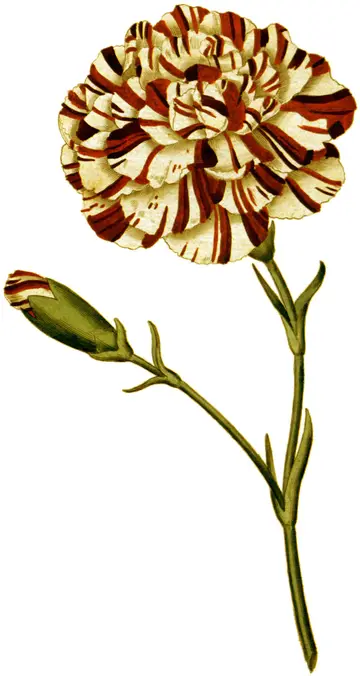
Image wanted. A licensed image will be added when found.
How to tell them apart
- Carnation: Not related. The garden carnation (Dianthus caryophyllus) is called "clove pink" because its flowers smell like the spice.
Side by side
| Carnation | Clove | |
|---|---|---|
| Scientific name | Dianthus caryophyllus | Syzygium aromaticum |
| Family | Caryophyllaceae (pink family) | Myrtaceae (myrtle family) |
| Form | herbaceous, perennial, evergreen | tree, perennial, evergreen |
| Height | Up to 80 cm | 8–12 m |
| Flower colour | Red, Pink, White, Yellow | White, Pink |
| Origin | Balkans (Greece, Albania) | Maluku Islands (Indonesia) |
| Toxicity | Cats: mildly toxic / irritant · Dogs: mildly toxic / irritant | — |
| Flowering | — | |
| Leaves | Opposite, narrow, strap-like, bluish grey-green leaves up to 15 cm long on a jointed stem. | Opposite, leathery, glossy, elliptic, fragrant leaves. |
| Flowers | Flowers 3–5 cm across, single or up to five together, with toothed or fringed petals. The wild form is bright pinkish-purple; cultivars are usually double, in red, pink, white, yellow, green or streaked. There is no true blue carnation; blue ones are dyed. The scent recalls cloves. | Small flowers in clusters at the branch tips, with reddish calyxes and many white stamens. For the spice the buds are picked as they start to turn pink, before they open. |
| Fruit and seeds | A small, cylindrical capsule. | Purplish-red, fleshy, one-seeded fruits. |
All pairs: look-alike plants · Full pages: Carnation, Clove