Telling them apart
Jade plant vs Money tree
Jade plant (Crassula ovata) and Money tree (Pachira aquatica) look similar enough to be confused. They belong to different families: Crassulaceae (stonecrop family) and Malvaceae (mallow family).
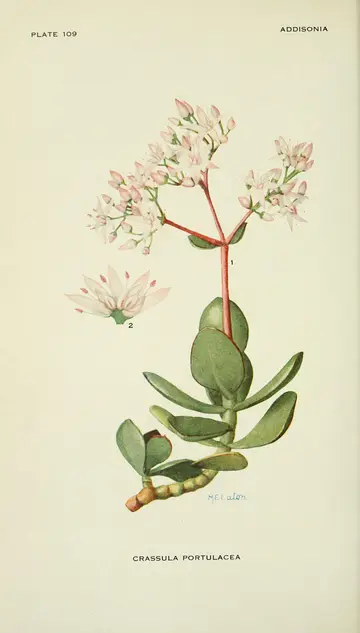
Image wanted. A licensed image will be added when found.
How to tell them apart
- Jade plant: Also called "money tree" in some languages, but it is a completely different plant: a succulent with thick, fleshy, oval leaves. Pachira has thin, hand-shaped compound leaves.
Side by side
| Jade plant | Money tree | |
|---|---|---|
| Scientific name | Crassula ovata | Pachira aquatica |
| Family | Crassulaceae (stonecrop family) | Malvaceae (mallow family) |
| Form | succulent shrub, perennial, evergreen | tree, perennial, evergreen |
| Height | Potted 30–100 cm; up to 2 m in the wild | Up to 23 m in the wild |
| Flower colour | White, Pink | White, Yellow |
| Origin | South Africa and Mozambique | Central and South America |
| Toxicity | Cats: toxic · Dogs: toxic | Cats: non-toxic · Dogs: non-toxic |
| Flowering | — | |
| Leaves | Opposite, thick, fleshy, oval leaves 3–9 cm long, glossy green and sometimes red-edged in strong light. | Long-stalked, palmately compound, slightly leathery, glossy green leaves with up to nine lance-shaped leaflets that can reach 28–30 cm. |
| Flowers | Clusters of small, star-shaped white or pink flowers in winter on older plants. | Showy flowers said to smell of lilac: narrow petals up to 32 cm long peel back like a banana skin to reveal hair-like yellowish-orange stamens, like a shaving brush. |
| Fruit and seeds | Small capsules. | — |
All pairs: look-alike plants · Full pages: Jade plant, Money tree