Telling them apart
Cedar of Lebanon vs Cilician fir
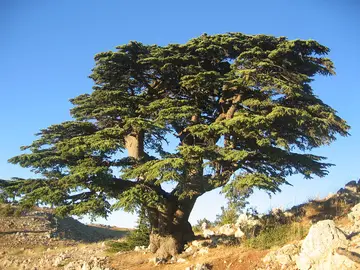
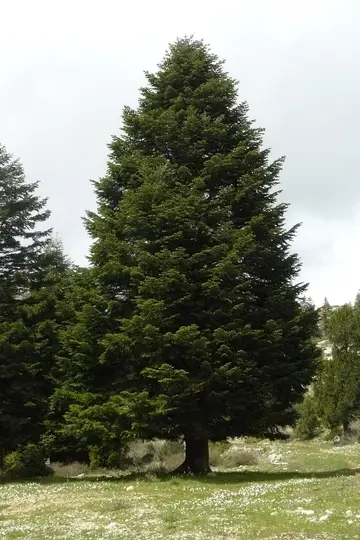
Cedar of Lebanon (Cedrus libani) and Cilician fir (Abies cilicica) look similar enough to be confused. Both belong to the same family, Pinaceae (pine family).
How to tell them apart
- Cedar of Lebanon: Grows in the same forests; its needles are in bunches and its cones barrel-shaped.
Side by side
| Cedar of Lebanon | Cilician fir | |
|---|---|---|
| Scientific name | Cedrus libani | Abies cilicica |
| Family | Pinaceae (pine family) | Pinaceae (pine family) |
| Form | tree, perennial, evergreen | tree, perennial, evergreen |
| Height | 30–40 m | 20–30 m |
| Flower colour | — | — |
| Origin | Taurus Mountains and Lebanon–Syria | Taurus Mountains and Lebanon–Syria |
| Toxicity | — | — |
| Flowering | — | — |
| Leaves | Stiff needles 1–3.5 cm long, dark or bluish green, in bunches of 30–40 on short shoots. | Flat needles with blunt or slightly notched tips and two distinct white bands underneath. |
| Flowers | Cedars do not flower; seeds develop in cones. | Firs do not flower; seeds develop in cones. |
| Fruit and seeds | Barrel-shaped, resinous cones 8–12 cm long standing upright on the branches; they take two to three years to ripen and break up on the tree. | Large, cylindrical cones standing upright on the branches and breaking up on the tree when ripe. |
All pairs: look-alike plants · Full pages: Cedar of Lebanon, Cilician fir