Telling them apart
Black pine vs Cedar of Lebanon
Black pine (Pinus nigra) and Cedar of Lebanon (Cedrus libani) look similar enough to be confused. Both belong to the same family, Pinaceae (pine family).
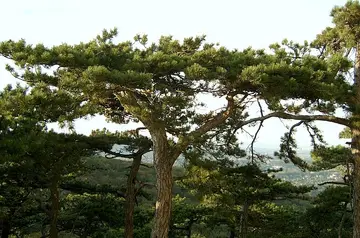
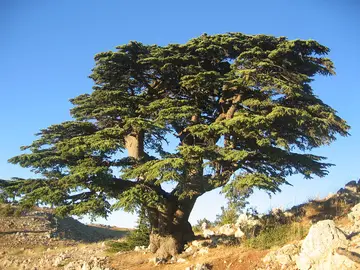
How to tell them apart
- Black pine: Its needles come in pairs and are much longer (10–18 cm), and its cones are egg-shaped, 5–10 cm long. Cedar needles are short (1–3.5 cm) and grow in tufts of 30–40 on short shoots, and its barrel-shaped cones stand upright on the branch.
Side by side
| Black pine | Cedar of Lebanon | |
|---|---|---|
| Scientific name | Pinus nigra | Cedrus libani |
| Family | Pinaceae (pine family) | Pinaceae (pine family) |
| Form | tree, perennial, evergreen | tree, perennial, evergreen |
| Height | 20–55 m | 30–40 m |
| Flower colour | — | — |
| Origin | Southern Europe, Anatolia and North Africa | Taurus Mountains and Lebanon–Syria |
| Toxicity | — | — |
| Flowering | — | — |
| Leaves | Needles in pairs, mostly 10–18 cm long, stiff and dark green. | Stiff needles 1–3.5 cm long, dark or bluish green, in bunches of 30–40 on short shoots. |
| Flowers | Pines do not flower; in spring the male cones shed yellow pollen. | Cedars do not flower; seeds develop in cones. |
| Fruit and seeds | Egg-shaped, glossy brown cones 5–10 cm long, ripening about 18 months after pollination. | Barrel-shaped, resinous cones 8–12 cm long standing upright on the branches; they take two to three years to ripen and break up on the tree. |
All pairs: look-alike plants · Full pages: Black pine, Cedar of Lebanon